
MongoDB Atlas
The MongoDB Atlas connector supports Identity & Access collection for an Atlas organization. Collection options can include organization users, database users, and organization API keys.
Required values
- API Public Key and API Private Key
- Organization ID for the Atlas organization Superviso should read
Required access
Grant the API key the Organization Read Only role. Select only the organization-user, database-user, and API-key
collection options required for your review scope.
Use a dedicated organization API key rather than a personal credential.
Before you start
Create the credentials listed above in the provider’s administration tools.
Configure in Superviso
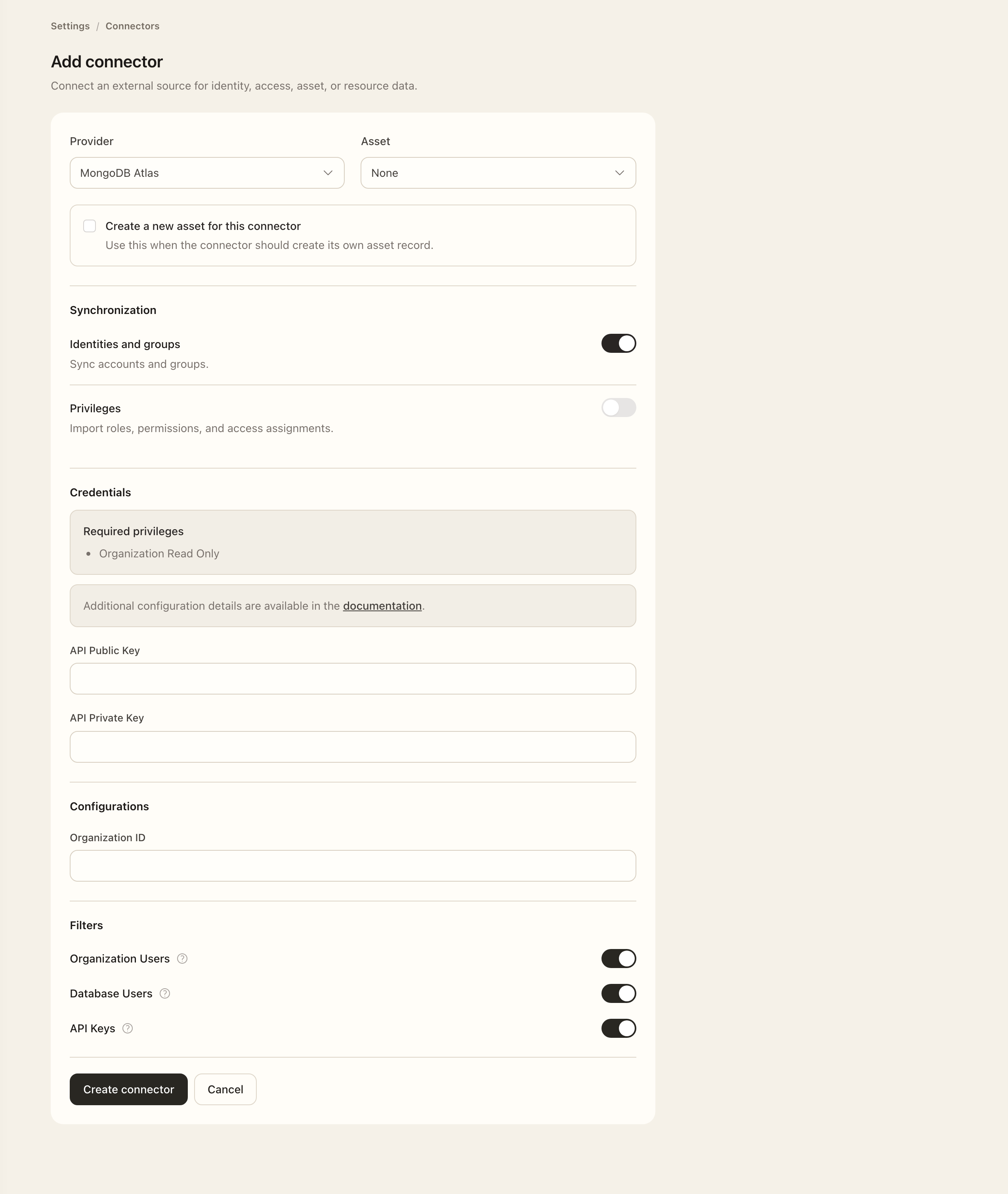
- Open Settings → Connectors and choose Add connector.
- Select MongoDB Atlas from Provider.
- Associate the intended asset, or use the new-asset option when appropriate. Enable only the supported synchronization options you need.
- Enter API Public Key, API Private Key, and Organization ID. Choose the required Organization Users, Database Users, and API Keys filters.
- Recheck the required privileges, scope, and filters, then choose Create connector. Resolve any validation errors shown by the form.
- Open the saved connector, choose Sync connector when available, and confirm the synchronization scope.
- Open Logs, wait for execution to finish, and inspect the result and any errors. Open the relevant Identities, Privileges, or Resources page for the enabled integration to verify collected records.
Expected outcome
The connector is saved for MongoDB Atlas with the intended integration and collection scope. Synchronization logs show progress, results, and imported records.
If setup or synchronization fails
Check the exact account or organization identifier, required form values, credential validity, granted access, and selected filters. Inspect the failed log’s details before retrying. If only some records are missing, check their scope and provider permissions. For synchronization status and source-managed fields, see Connectors and synchronization logs.